Spatial Layout and Functional Zoning
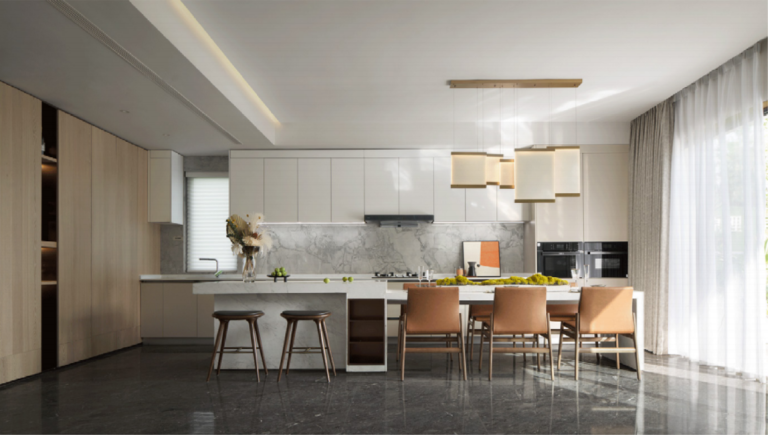
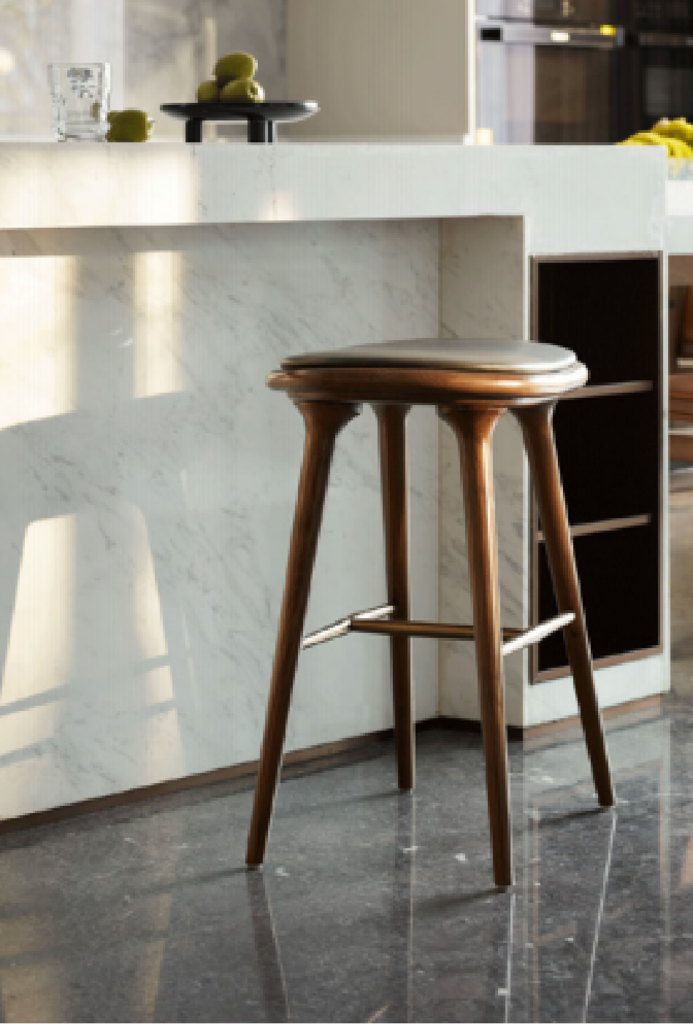
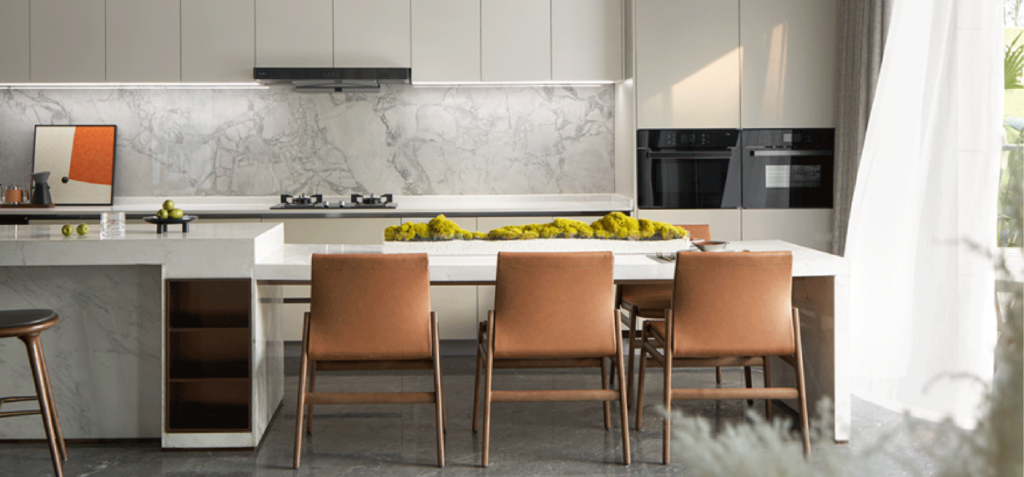
The core of the design is a large central island that serves as a multi-functional hub, seamlessly connecting the kitchen preparation area with the dining zone. This island incorporates a secondary countertop for casual dining, supported by two high wooden bar stools, while the extended section accommodates a formal dining table surrounded by six upholstered chairs. This configuration effectively divides the open space into distinct yet interconnected zones:
- Kitchen Work Zone: Equipped with floor-to-ceiling light wood cabinetry, a full-height marble backsplash, and integrated stainless steel appliances, including double ovens and a gas cooktop.
- Casual Dining Zone: The island’s shorter counter provides a compact area for quick meals or socializing, while the adjacent formal dining table caters to family gatherings and entertaining.
- Lighting and Circulation Zone: The high-ceilinged space is enhanced by large floor-to-ceiling windows with sheer curtains, maximizing natural light penetration, while a linear chandelier with fabric shades provides ambient illumination over the dining table.
Material Palette and Textural Expression
The design relies on a curated selection of natural materials to create a warm, tactile atmosphere:
- Stone Surfaces: White marble with subtle grey veining is used extensively for the island countertop, dining table, and kitchen backsplash, lending a sense of luxury and continuity. The floor is clad in dark grey polished stone, providing a grounding contrast to the lighter upper surfaces.
- Wood Elements: Light-toned oak cabinetry and dark walnut furniture (bar stools and dining chair frames) introduce organic warmth and textural variation, softening the hard stone surfaces.
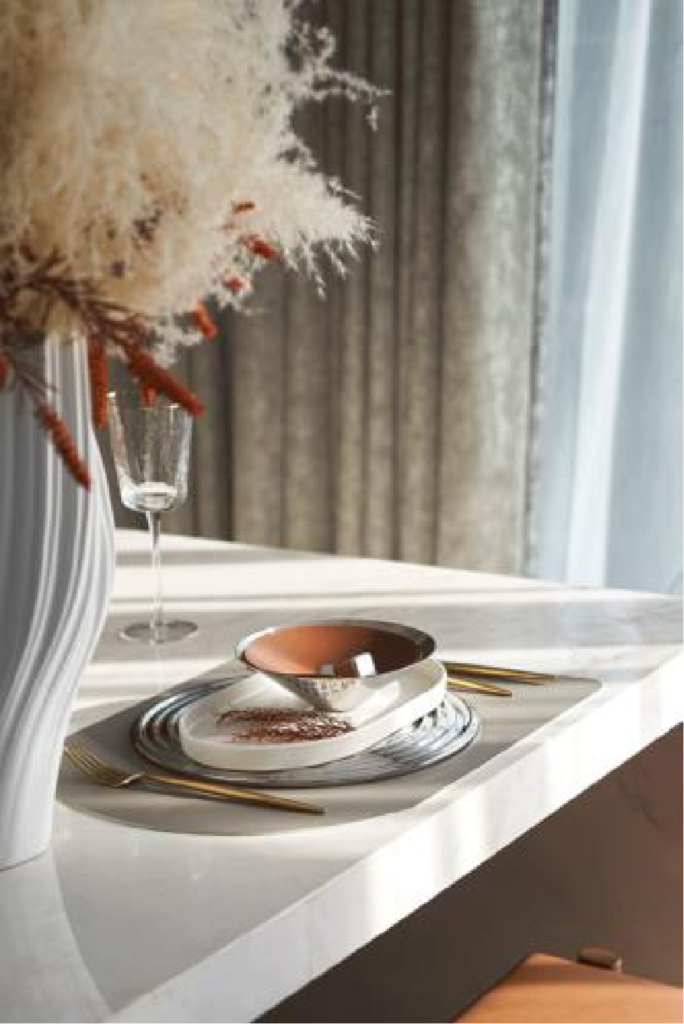
Textile and Metal Accents: Tan leather upholstery on the dining chairs adds a rich, tactile element, while brushed brass details on the lighting fixtures and cutlery provide subtle metallic highlights. Sheer white and grey linen curtains filter natural light, contributing to a soft, airy ambiance.
Lighting Design and Atmosphere
The lighting strategy is layered to accommodate different functional and mood requirements:
- Ambient Lighting: Recessed linear LED strips along the ceiling perimeter and a central fabric-shaded chandelier provide soft, diffused general illumination.
- Task Lighting: Under-cabinet LED strips illuminate the kitchen work surfaces, ensuring clear visibility for food preparation.
- Natural Light: Floor-to-ceiling windows allow abundant natural light to flood the space, creating dynamic patterns of light and shadow throughout the day.
This combination of artificial and natural light fosters a welcoming, serene atmosphere that transitions seamlessly from daytime functionality to evening intimacy.
Aesthetic and Design Philosophy
The project adheres to the principles of modern minimalism, characterized by clean lines, uncluttered surfaces, and a focus on material integrity. The open-plan layout promotes social interaction and spatial flow, aligning with contemporary lifestyle preferences. The restrained color palette—dominated by whites, greys, and warm wood tones—creates a timeless, sophisticated aesthetic that feels both calm and inviting. Decorative elements, such as the abstract wall art, dried floral arrangements, and moss centerpiece, are strategically placed to add visual interest without disrupting the overall sense of order and tranquility.
Conclusion
This open kitchen-dining space exemplifies a successful integration of aesthetic refinement and functional practicality. Through careful material selection, thoughtful spatial planning, and a layered lighting approach, the design achieves a harmonious, light-filled environment that elevates the everyday experience of cooking and dining. It serves as a compelling case study in how modern residential design can balance minimalist elegance with the warmth and functionality required for contemporary family life.