If your cooking area feels more like a claustrophobic tunnel than an inspiring space, you aren’t alone. While many view this narrow setup as a compromise, professional chefs actually prefer it. Smart Galley Kitchen Layout Design Ideas reframe this perceived hallway into a high-efficiency cooking zone where everything sits exactly where you need it.
Industry layout standards show that the secret to this speed lies in optimizing kitchen work triangle paths—the invisible lines connecting your sink, stove, and fridge. Think of these primary appliances as a tight cluster where you can effortlessly pivot from washing to sautéing. In a well-planned small kitchen layout, reaching your next ingredient requires no more than two steps.
Making this footprint comfortable requires careful attention to ergonomic clearance, meaning the physical space needed to open an oven door or walk behind a partner. According to standard design guidelines, ignoring these measurements causes a frustrating “Two-Cook Dance” full of bumped elbows. Resolving these daily conflict points maximizes your space’s aesthetic and practical potential.
Why the ’36-Inch Rule’ is the Secret to a Comfortable Walk-Through Kitchen
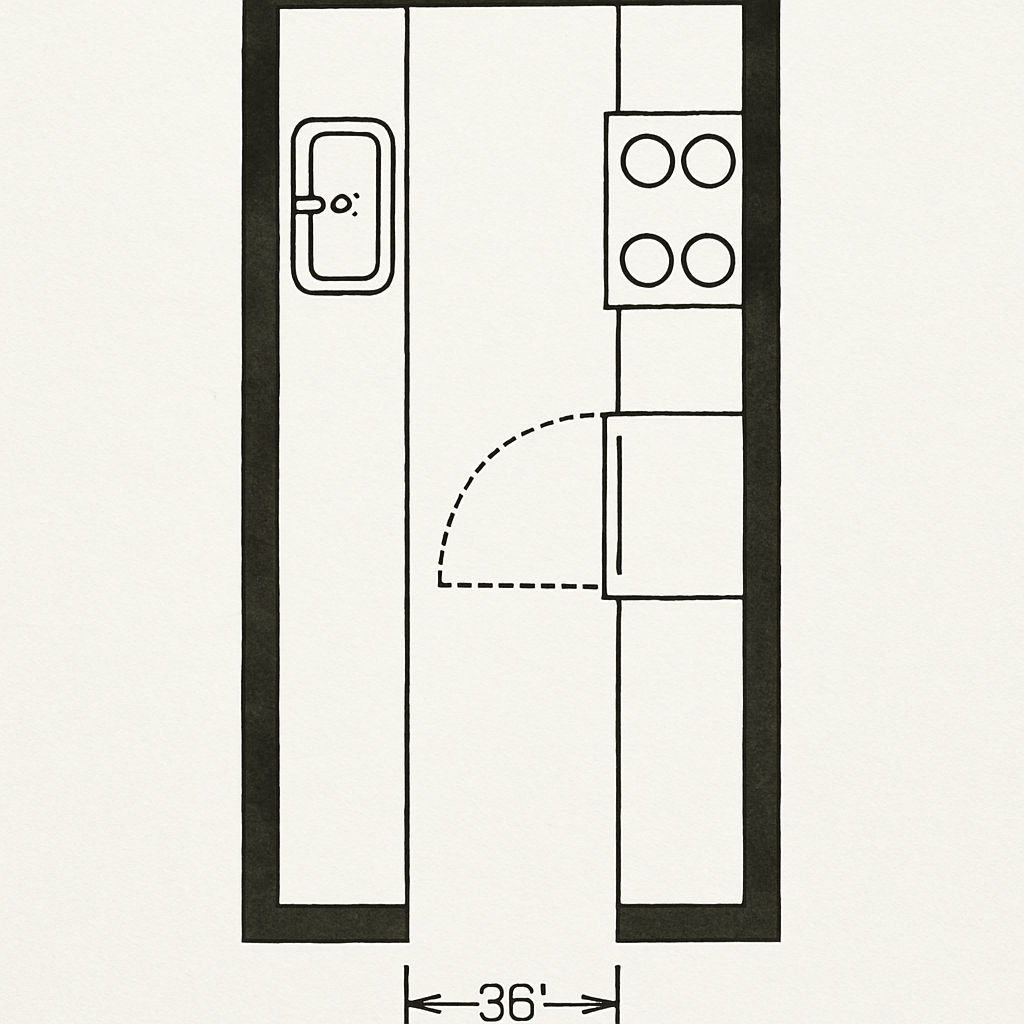
Ever bruised your hip turning around? That frustration usually stems from ignoring the golden rule of walkway sizing. When calculating how wide should a galley kitchen aisle be, 36 inches is the strict minimum. It is the exact ergonomic width required for one person to pivot safely between opposite counters while holding a hot pan.
Beyond standing room, you must account for your “swing radius”—the space appliance doors consume when fully open. A classic design mistake is placing an oven directly across from a dishwasher without measuring these invisible footprints. If both open simultaneously in a tight corridor, you instantly create a dangerous roadblock.
To maintain safe traffic lanes while maximizing counter space in a walk-through kitchen, always verify these minimum clearance requirements before ordering cabinets:
- Dishwasher opening: 21 to 27 inches (leaving enough room to stand beside the open door).
- Oven door swing: 20 to 25 inches minimum.
- Two-person passing: 48 inches (the ideal width if your kitchen acts as a busy thoroughfare to the rest of the house).
Once your floor plan breathes properly, you can deploy small galley kitchen storage hacks to keep those pathways clutter-free. When horizontal floor space is maxed out, the smartest direction to build is up.
Mastering ‘Vertical Real Estate’: How Floor-to-Ceiling Cabinetry Doubles Your Storage
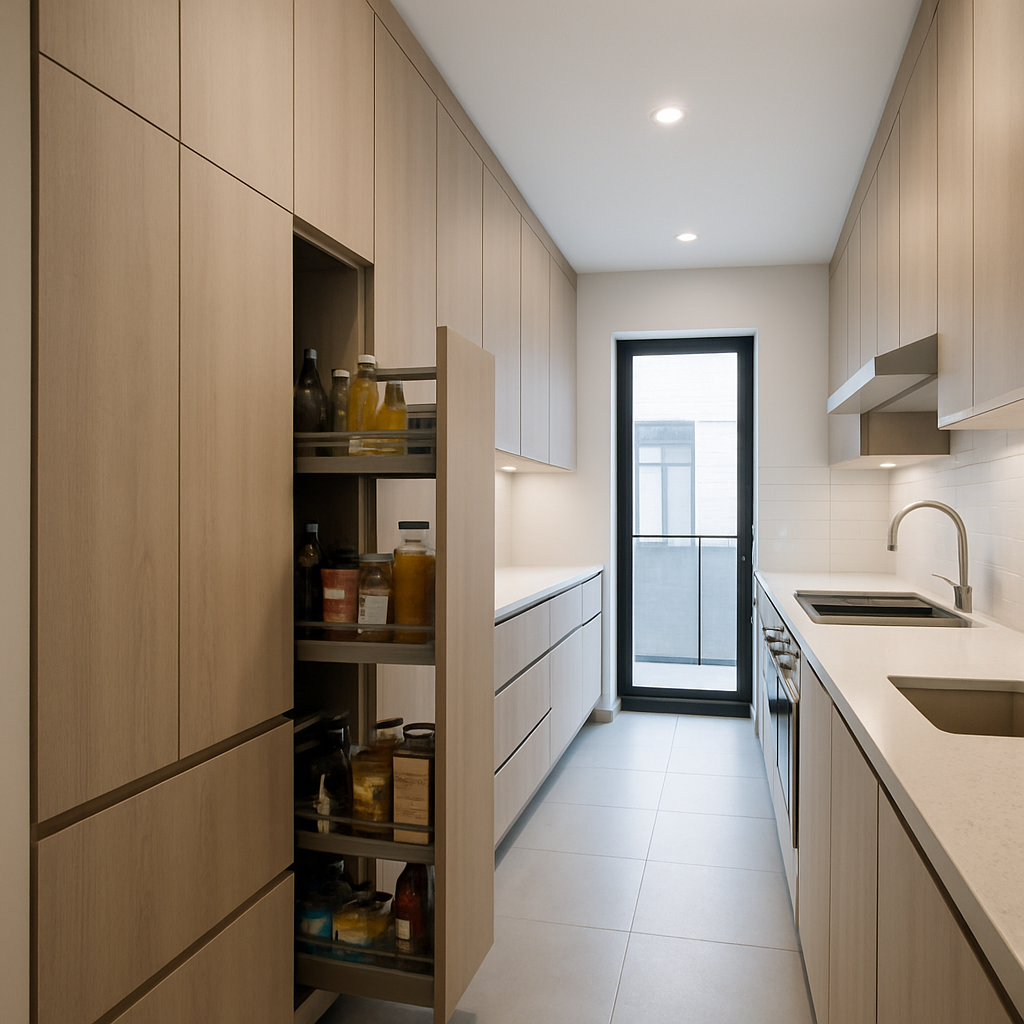
Looking up at the empty gap above standard cabinets reveals a massive missed opportunity for organization. By investing in floor-to-ceiling cabinetry for narrow kitchens, you can reclaim up to 20% more storage space without expanding your floor plan. Extending your cabinets upward turns that awkward, dust-collecting void into prime vertical real estate, giving you the perfect home for holiday platters, slow cookers, and rarely used gadgets.
Deep vertical storage is only valuable if you can actually reach what is inside. Instead of digging through dark, deep shelves to find a single jar, tall pull-out larders slide the entire contents out to you. This simple hardware upgrade ensures that every inch of interior depth is utilized effectively, keeping your daily pantry staples instantly accessible without requiring you to unload the front row.
Maximizing capacity also means hunting for hidden “dead zones” near the floor, which is a crucial element of smart parallel kitchen cabinet design ideas. The recessed baseboard area at your feet—known as the toe-kick—can easily convert into shallow, sliding drawers designed specifically for flat baking sheets. Combine these secret compartments with integrated appliances for seamless kitchen design, concealing your refrigerator and dishwasher behind matching panels to eliminate bulky visual interruptions.
Once every pan and appliance has a streamlined home, your countertops finally remain completely clear for meal prep. However, even the most highly organized layout can still feel restrictive if the room itself feels like a hallway, making visual expansion strategies essential.
Breaking the ‘Tunnel Effect’: Visual Tricks to Make Your Narrow Kitchen Look Twice as Wide
Even with perfectly organized storage, standing between tall parallel rows of cabinetry can feel claustrophobic. When choosing between a one-wall vs two-wall kitchen layout, managing “visual weight”—how heavy or imposing an object feels—is critical to avoiding a tunnel effect. Since you likely know that a light color palette helps a room breathe, the next step is actively tricking the eye into expanding the room’s physical boundaries.
Wondering how to make a narrow kitchen look wider without lifting a sledgehammer? Focus on these three transformative strategies:
- Reflective Backsplashes: High-gloss ceramic or glass tiles act like subtle mirrors. Bouncing light across the aisle visually pushes the walls outward.
- Floor Orientation: Running planks or rectangular tiles horizontally (side-to-side) rather than parallel to your cabinets draws the eye across the room, instantly faking a broader footprint.
- Shelving Balance: Weighing the open shelving in small kitchens pros and cons is essential. Swapping a few solid upper cabinets for open shelves breaks up heavy visual blocks, though they do require neatness to prevent space-shrinking clutter.
Maximizing these reflective surfaces and clever sightlines requires the right illumination to truly shine.
Lighting Strategies for Windowless Galley Kitchens: Creating Depth with Layers
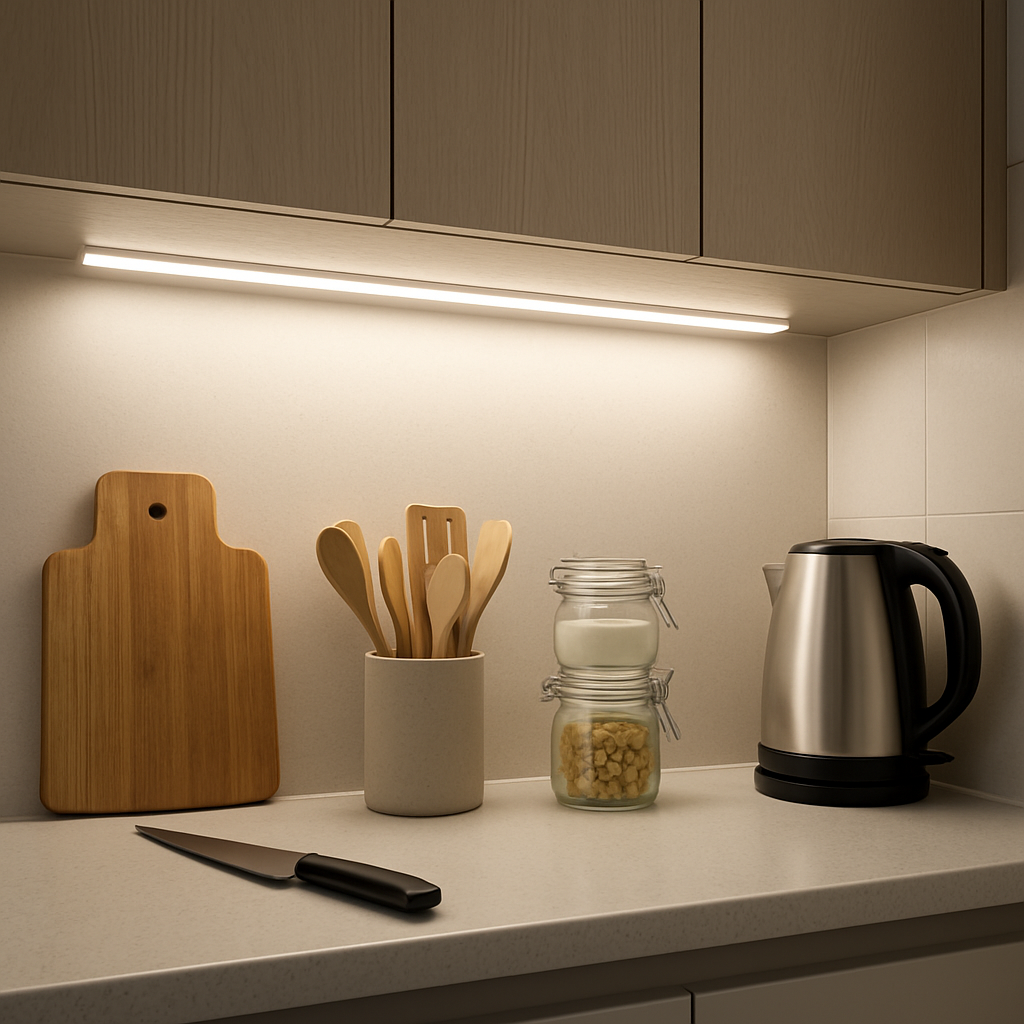
Relying on a single ceiling fixture often casts your shadow onto the workspace. While overheads provide “ambient lighting” (general room illumination), effective lighting strategies for windowless galley kitchens require focused “task lighting.” Since you know where your outlets are, plugging in under-cabinet LED strips is an easy, immediate fix. This eliminates frustrating prep shadows without artificially inflating your modern galley kitchen remodel cost.
To visually expand the space, you must strategically layer these sources. Merging task and ambient light with “accent lighting” works wonders. Placing a simple puck light above your upper cabinetry draws the eye directly toward the ceiling, preventing the room from feeling oppressive. This upward glow naturally enhances minimalist galley kitchen decor ideas by adding dramatic visual depth without sacrificing a single inch of physical counter space.
The right bulb tone, known as color temperature, ensures the room feels cozy rather than clinical. Measured in Kelvins (K), lower numbers produce a warmer light. Aim for 3000K bulbs to achieve a crisp, inviting glow that mimics natural sunlight. With your narrow space beautifully illuminated, evaluating its overall efficiency against other designs becomes much clearer.
Galley vs. L-Shaped Layouts: Which Small Kitchen King Reigns Supreme?
Choosing between a galley vs L-shaped kitchen layout often comes down to handling corners. L-shaped kitchens open up the room, but they inherently create “dead corners”—awkward junctions where cabinets meet. To use this space, you need expensive “blind corner cabinets” (deep, hard-to-reach units requiring special pull-out shelves). Galleys eliminate this dilemma. Keeping everything on two parallel walls maximizes your “Workflow ROI.” Every dollar spent on cabinetry translates directly into accessible, highly efficient storage without wasting your budget on clunky corner mechanics.
Your lifestyle dictates which setup wins. When planning your galley kitchen design or an L-shaped alternative, weigh these three daily impacts:
- Storage capacity: Galleys offer more continuous linear cabinet space, whereas L-shapes sacrifice storage for openness.
- Cooking speed: By utilizing a tight, step-saving Work Triangle, galleys champion fast, solo meal prep.
- Guest accessibility: L-shapes naturally invite mingling, while narrow galleys remain strictly cook-only zones.
Equipping your layout properly ensures it functions beautifully. Finding the best appliances for small galley kitchens—like counter-depth refrigerators or slimline dishwashers—keeps your walkways clear and prevents the “two-cook dance” from becoming a collision. With your footprint and appliance strategy locked in, you are ready for the final step of executing the transformation.
Your Galley Transformation Roadmap: From Blueprint to First Meal
A narrow footprint doesn’t mean compromising on function. You now have the tools to transform a cramped corridor into a professional-grade workspace. By applying these Galley Kitchen Layout Design Ideas, you can dramatically improve your home’s visual flow, daily cooking efficiency, and long-term resale value.
Before hitting the hardware store, use this ‘Galley Readiness’ Checklist to turn your plans into action:
- Clearances: Measure your walkway to guarantee 36 to 48 inches before finalizing your new small kitchen layout.
- Appliance Scale: Finalize exact dimensions for space-saving, counter-depth appliances before purchasing.
- Verticality: Audit your existing setup to prioritize vertical expansion straight to the ceiling.
- Lighting: Layer in under-cabinet task lighting for an immediate, eye-tricking visual lift.
Try implementing just one of these small galley kitchen storage hacks this weekend, and experience firsthand how a few smart adjustments can make your space feel twice as large.