Spatial Layout and Cabinetry System
The kitchen adopts a linear + island layout, which is highly efficient for workflow and social interaction:
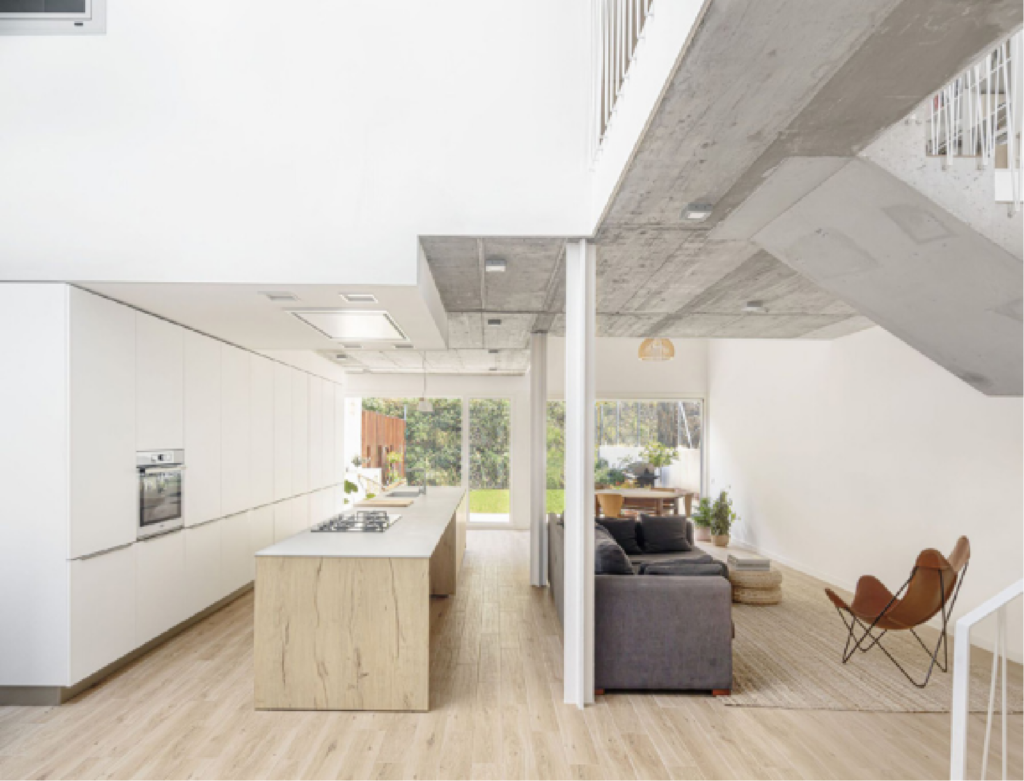
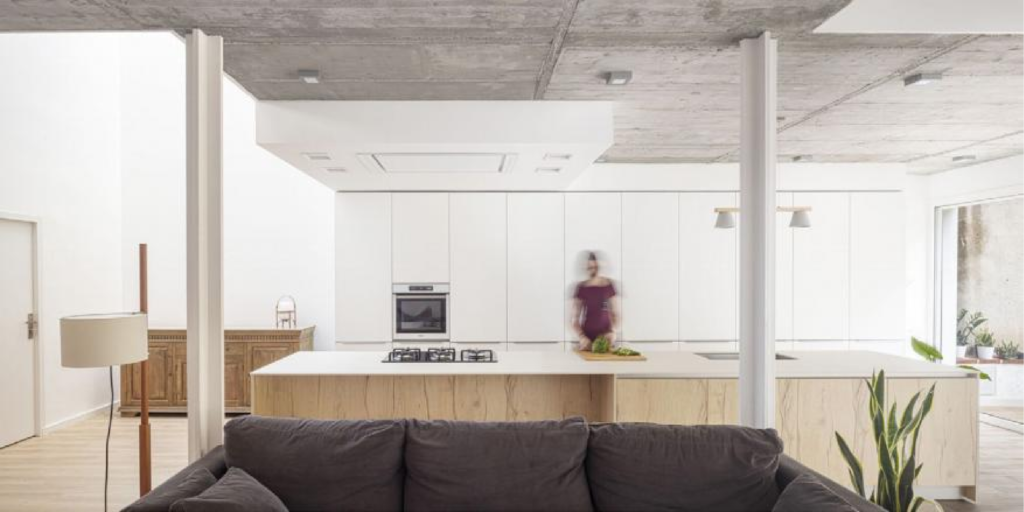
- Wall-mounted Cabinetry: A continuous run of handleless white matte cabinets lines the entire length of the wall, maximizing storage capacity while maintaining a clean, uncluttered look. Integrated built-in appliances (including a combination oven, induction cooktop, and range hood) are seamlessly embedded into the cabinetry, creating a uniform visual effect.
- Island Unit: The central island serves as both a food preparation zone and a casual dining counter. Its base is crafted from light-toned oak with visible natural grain, contrasting elegantly with the white quartz countertop. The island extends the kitchen’s functional area and acts as a visual divider between the kitchen and living room.
- Open Flow: The absence of solid partitions allows the kitchen to connect directly with the living area and the outdoor garden, fostering a sense of spaciousness and facilitating family interaction during cooking and entertaining.
Material Selection and Aesthetic Expression
The material palette is carefully curated to balance industrial rawness and natural warmth:
- Cabinetry Materials:
- Wall cabinets: White matte laminate, which is durable, easy to clean, and reflects natural light to enhance the sense of space.
- Island cabinetry: Solid oak with a clear finish, showcasing the wood’s natural texture and grain to add warmth to the minimalist space.
- Countertops and Backsplashes: White engineered quartz is used for both the island and wall countertops, offering excellent stain resistance and a seamless, sleek appearance. The backsplash is omitted to maintain the clean lines of the white cabinetry.
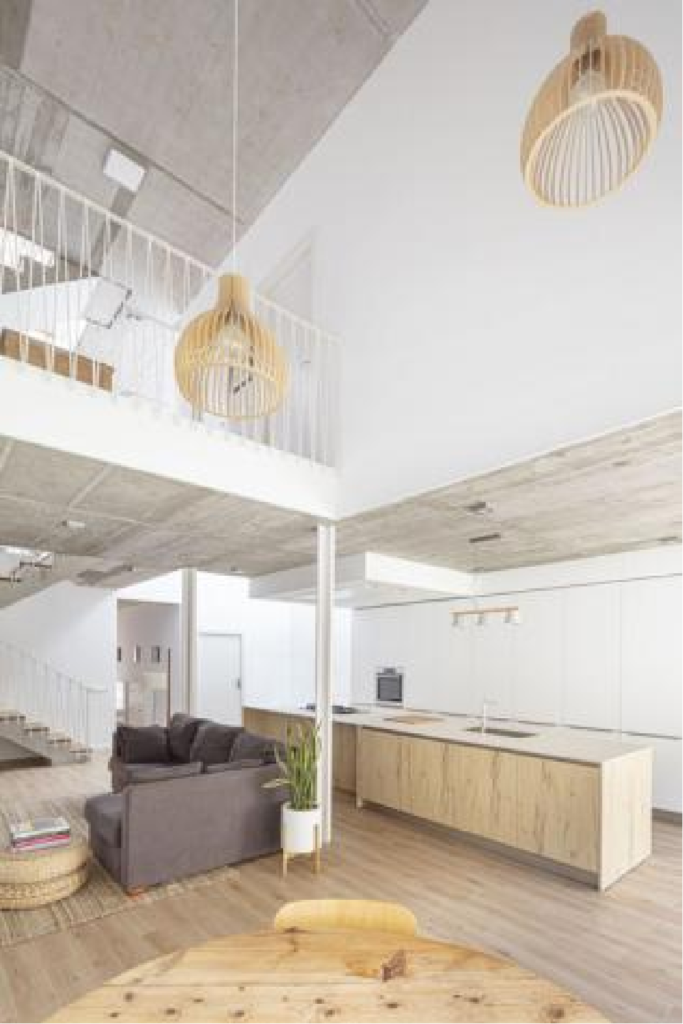
- Structural Materials: Exposed reinforced concrete ceilings and white-painted steel columns retain the building’s industrial character, while light oak flooring unifies the kitchen and living areas, creating a warm, cohesive ground plane.
Lighting and Environmental Design
The lighting strategy prioritizes natural light and layered artificial illumination:
- Lumière naturelle: Large floor-to-ceiling sliding glass doors at the rear of the space open directly to the private garden, flooding the kitchen with abundant natural daylight and offering views of greenery.
- Artificial Lighting:
- Recessed LED spotlights embedded in the concrete ceiling provide general ambient lighting.
- Linear under-cabinet LED strips offer task lighting for food preparation areas.
- Handcrafted wooden pendant lights with open slatted designs hang above the dining area, adding a warm, organic touch and defining the dining zone visually.
Functional Design and Sustainability Considerations
- Ergonomic Workflow: The kitchen follows the classic “work triangle” principle, with the sink, cooktop, and refrigerator arranged in a logical sequence to minimize movement during food preparation.
- Storage Optimization: Tall cabinet units reach the ceiling, providing ample storage for pantry items and small appliances, while drawer organizers and pull-out shelves ensure efficient use of space.
- Sustainability: The design incorporates eco-friendly materials, including FSC-certified oak wood, low-VOC paints, and energy-efficient LED lighting. The open layout and large windows maximize natural ventilation, reducing the need for artificial cooling in the Mediterranean climate.
Conclusion
This Catalan villa kitchen exemplifies how modern European design can balance aesthetic minimalism, functional efficiency, and environmental consciousness. By integrating handleless cabinetry, natural wood, and exposed concrete, the space achieves a sophisticated yet warm atmosphere that aligns with contemporary Mediterranean living. The open-plan layout and seamless connection to the outdoors highlight the European emphasis on blending interior and exterior spaces, creating a kitchen that is both a practical workspace and a social hub for family life.